Projects
Research and engineering work from my time at SIU Carbondale.
Radiacode Acquired Data (RAD)
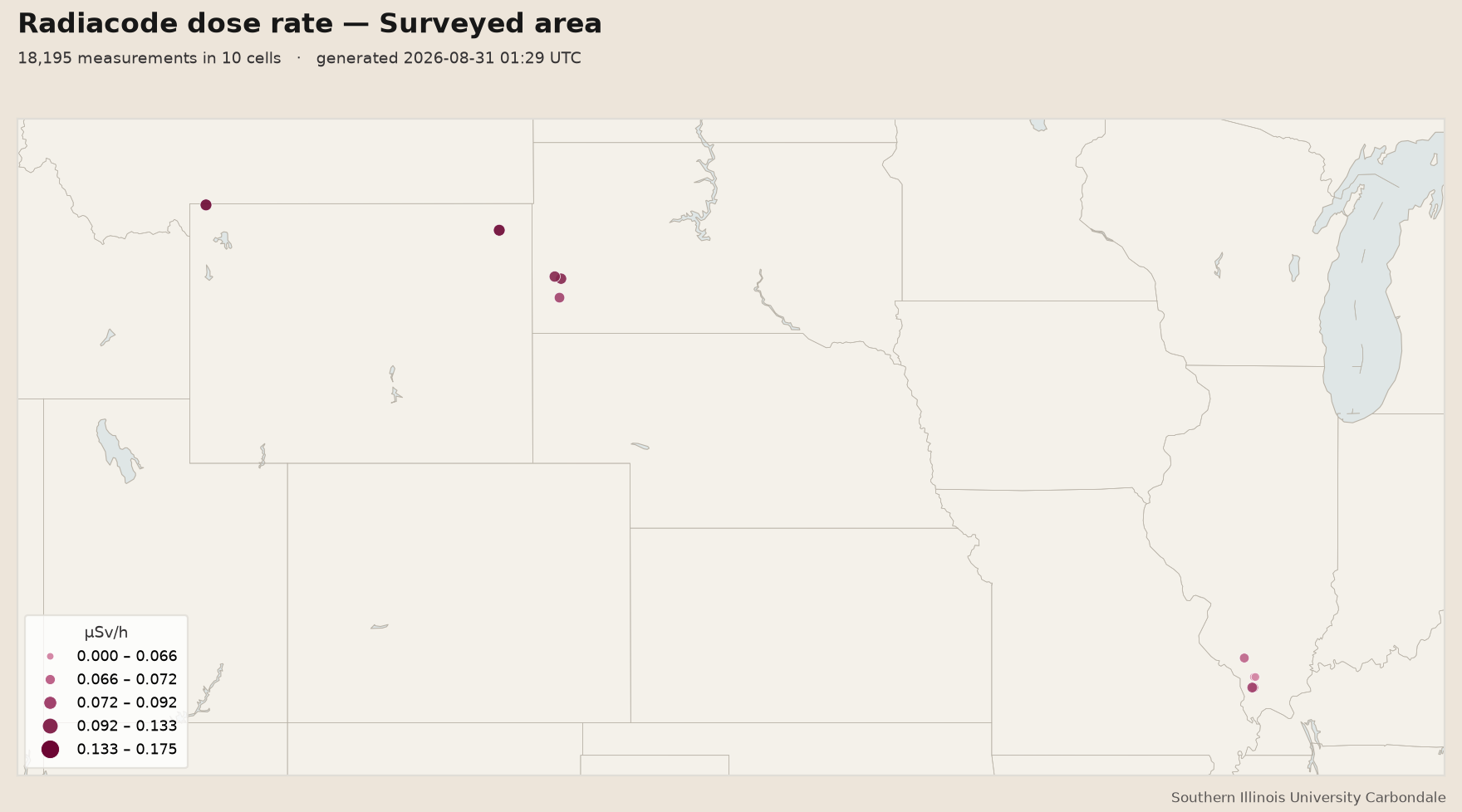
Radiacode Acquired Data, or RAD, is a project to measure environmental radiation levels using Radiacode personal dosimeters. Team members collect readings with GPS tracks, and the readings are imported into a central database and turned into dose-rate maps.
Poster, APS Division of Nuclear Physics Meeting, October 2026: “Building a Large-Scale Radiation Monitoring Dataset Using Consumer Semiconductor Gamma-Ray Spectrometers”
- Built the import pipeline that loads the dosimeter data into an Oracle Autonomous Database.
- Built a public Oracle APEX page with SIU-themed styling, plus a script that generates static dose-rate map images from the live data and publishes them.
- Used QGIS and GeoPackage layers with elevation data for the GIS side of the analysis.
Modular Laser System for SEOP
Spin exchange optical pumping (SEOP) uses laser light to hyperpolarize noble gases such as xenon, which makes them far more visible to NMR and MRI. High-power lasers for this are expensive, so the lab's goal is a modular system that combines several lower-power, lower-cost laser modules into one beam.
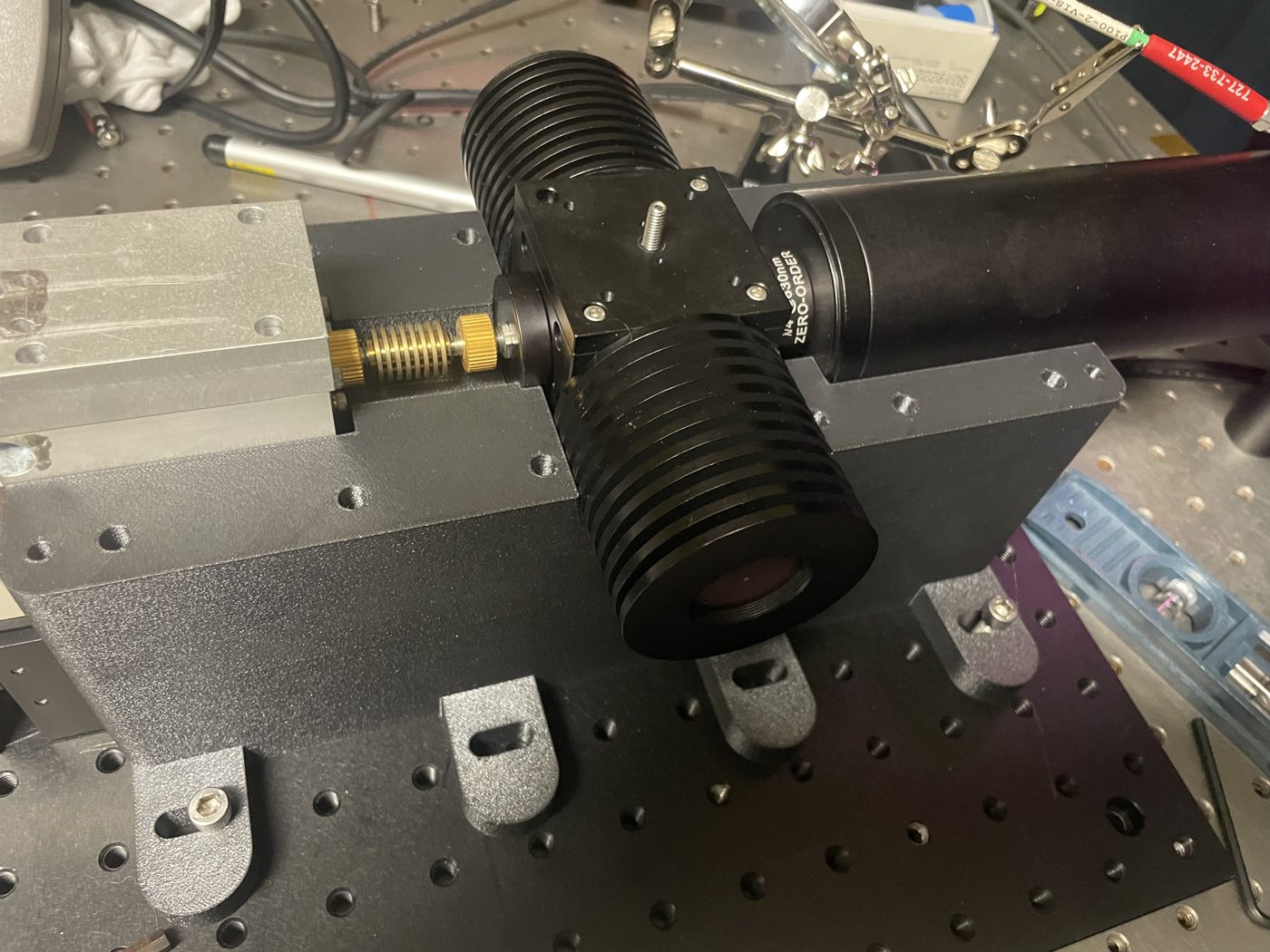
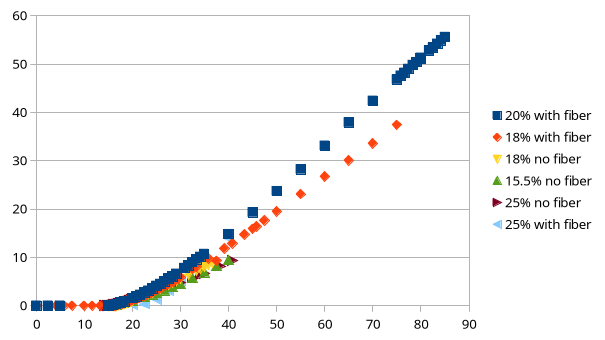
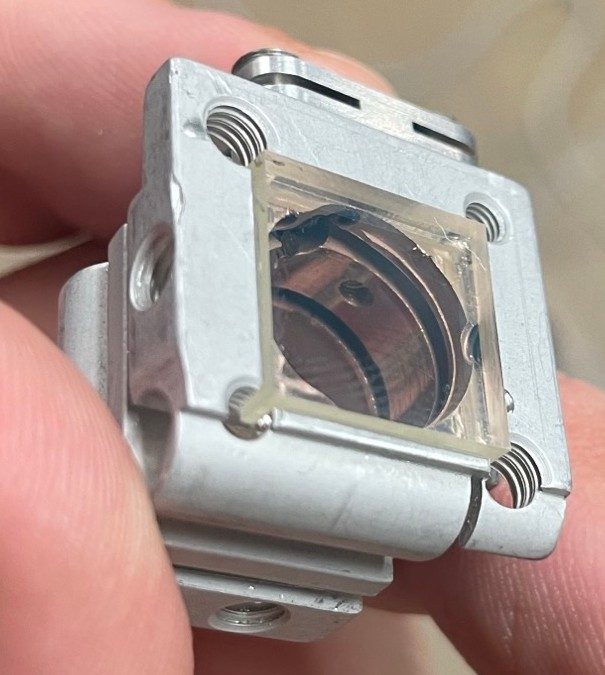
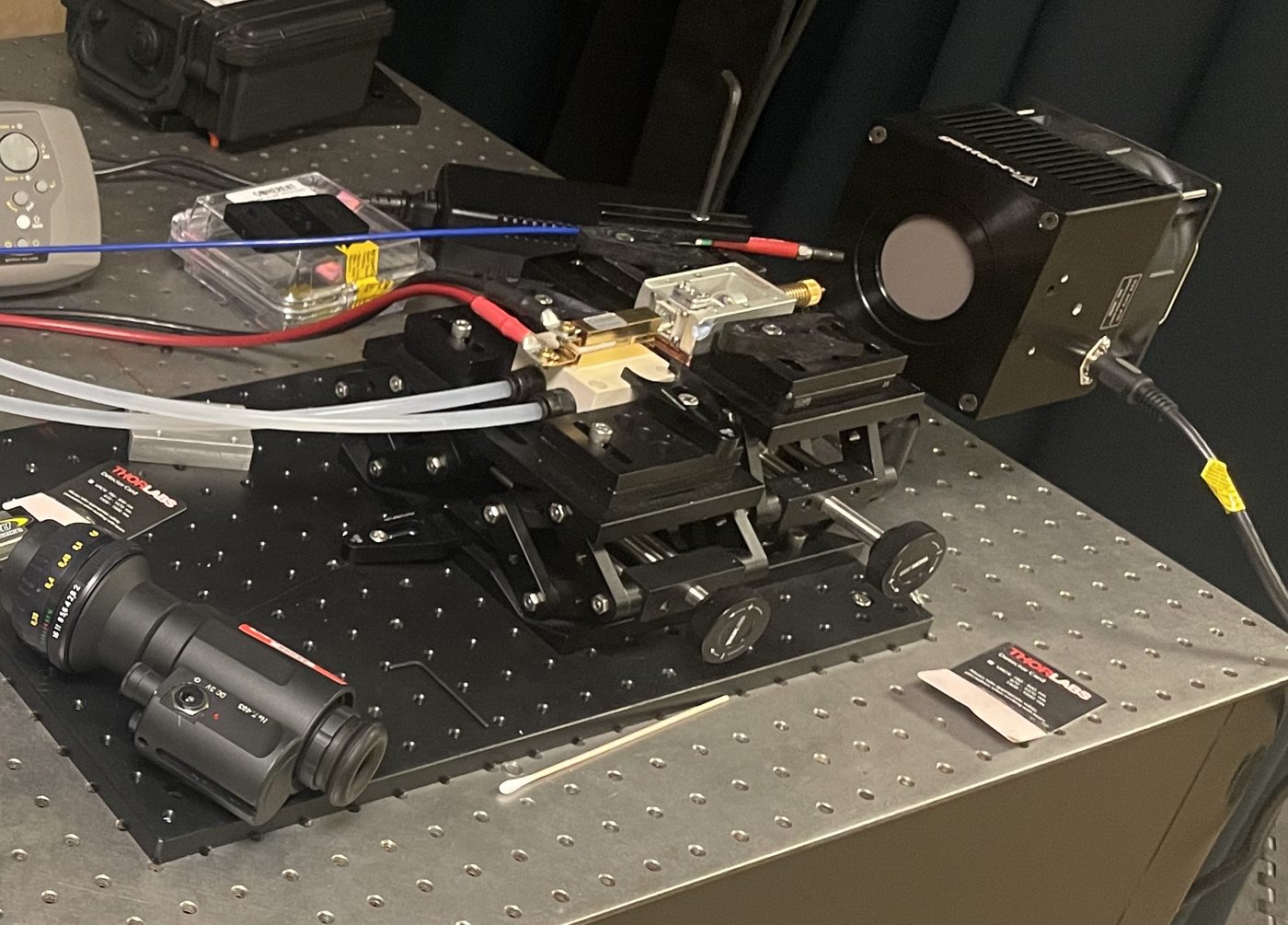
- Characterized laser diode arrays with volume Bragg gratings (VBGs) of different reflectivities, measuring power and spectra across drive currents. In our tests a VBG near 20% reflectivity gave the best output for one array.
- Identified that the original power supply could not deliver the 80 A+ needed for full characterization, and worked on upgrading the setup.
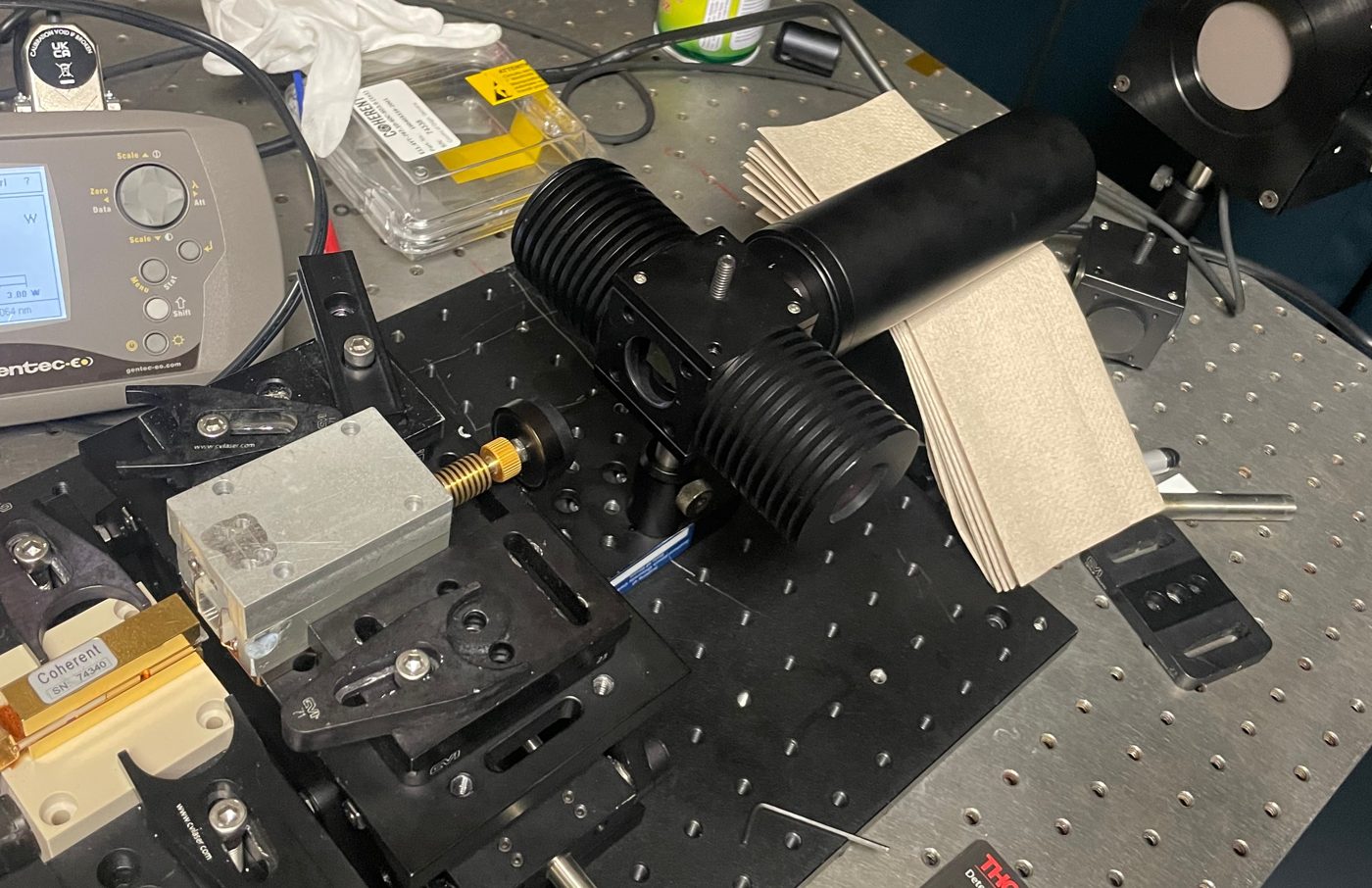
- Built a beam-expanding telescope to collimate the beam to two inches, so it fills the full volume of the gas cell.
- Redesigned the VBG mount so gratings can be swapped without a tedious realignment, and designed 3D-printed parts for a more adjustable stand.
- Began automating the test procedures in software, and wrote a REACH proposal for xenon hyperpolarization with the modular system.
Spin-Noise Network
The Spin-Noise Network is a community measurement program for nuclear spin noise. Any NMR facility with a spectrometer can contribute data with one sample tube and one command, and the combined data maps how spin noise behaves across many kinds of probes. It is part of CASPEr@night, a search for dark matter in the noise of idle NMR spectrometers.
I'm a contributor to this project. The program is led by John W. Blanchard and the CASPEr-Night team.